
A grinding, squealing, or jerking garage door often points to one culprit: worn rollers. When a single roller fails, many homeowners face the same question—do you swap out just that one piece, or replace the entire set? The answer depends on roller age, door weight, and how the remaining rollers look under inspection.
This guide walks you through the signs of roller wear, the real cost difference between partial and full replacement, and what local conditions in Colorado Springs do to roller lifespan. You will also learn when a quick single-roller fix is enough, when a full set swap protects you better, and how professional garage door roller repair in Colorado Springs can save you from a more expensive breakdown later.
Key Takeaways
- Replacing one roller makes sense only when the rest of the set is in good condition and the door is relatively new.
- Colorado Springs freeze-thaw cycles and UV exposure accelerate roller wear faster than in milder climates.
- Federal regulations under 16 CFR 1211.16 require that cable, spring, and related hardware repairs be performed by a qualified service person.
- Nylon rollers last longer and run quieter than standard steel rollers in residential applications.
- A full roller set replacement typically costs less than a future emergency service call caused by cascading failures.
- Professional inspection catches related issues—track misalignment, worn hinges, frayed cables—that a single roller swap might miss.
What Garage Door Rollers Actually Do
Rollers are the small wheels that guide your garage door along its metal tracks. They carry the full weight of the door panel with every open-and-close cycle. Without smooth-rolling, properly seated rollers, your door drags, binds, or jumps off track.
Most residential doors use between 10 and 14 rollers depending on door height. Each roller sits inside a stem that attaches to a hinge bracket on the door section. The wheel rides inside the vertical and curved sections of the track.
Rollers come in three main materials: steel, nylon, and nylon with sealed ball bearings. Steel rollers are loud and prone to rust. Standard nylon rollers are quieter but wear faster under heavy doors. Nylon rollers with sealed ball bearings offer the best combination of quiet operation and durability—typically rated for 100,000 cycles or more.
Signs Your Rollers Need Attention During Garage Door Roller Repair in Colorado Springs
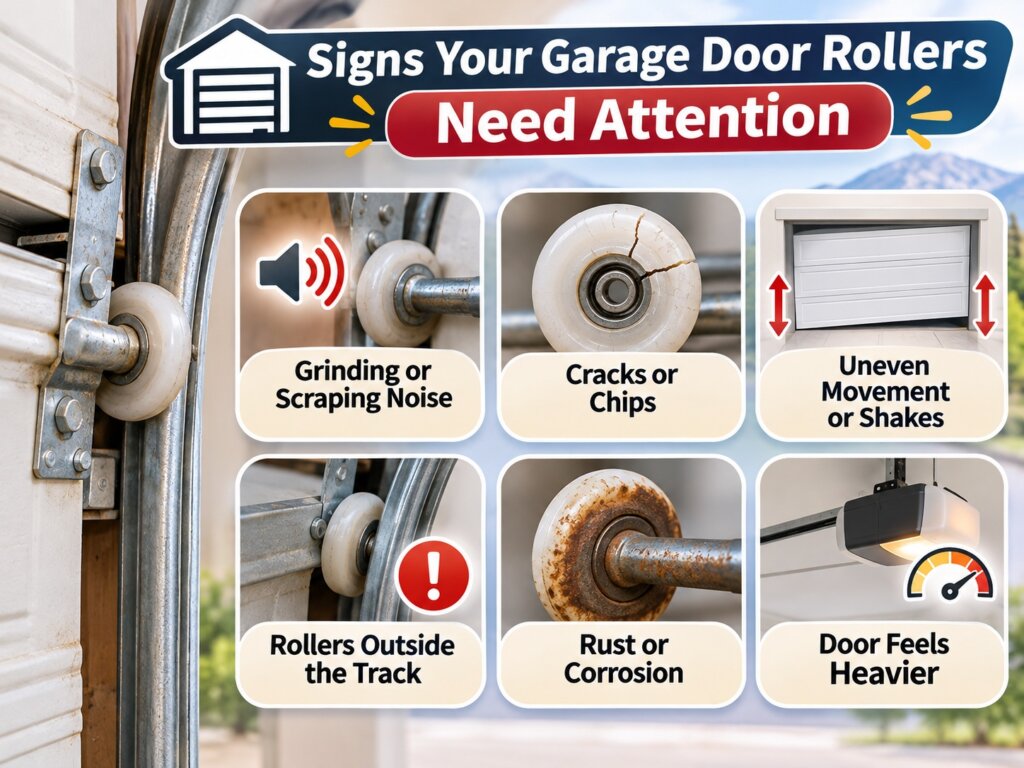
Identifying roller problems early prevents track damage and opener strain. The door gives clear signals when rollers are failing. Catching these signs early keeps repair costs manageable.
1. Grinding or Scraping Noise on Every Cycle
A grinding sound usually means the roller bearing has seized or the wheel has cracked. The steel stem then drags against the track instead of rolling smoothly. This puts extra load on the opener motor and can score the track surface.
2. Visible Cracks or Chips on the Roller Wheel
Inspect the wheels directly. Cracked nylon or flat spots on steel rollers create an uneven ride. A chipped wheel can catch on a track seam and cause the door to jump off track mid-cycle.
3. Door Moves Unevenly or Shakes
If one side of the door rises faster than the other, or the door vibrates noticeably, one or more rollers are not spinning freely. Uneven movement also stresses the torsion spring and cables over time.
4. Rollers Sitting Outside the Track
A roller that has popped partially out of the track is a safety risk. Do not attempt to force the door open or closed. This situation calls for immediate professional service.
5. Rust or Corrosion on the Stem or Wheel
Colorado Springs winters bring road salt, snow, and freeze-thaw moisture into garages. Steel rollers corrode quickly in these conditions. Surface rust on the stem weakens the connection to the hinge bracket.
6. Door Feels Heavier Than Usual
When rollers drag rather than roll, the opener works harder to lift the door. You might notice the door moving more slowly or the opener motor running longer than normal. This is a sign of significant roller friction.
Now that you know what to look for, the next question is whether you need to replace one roller or the full set.
Replace One Roller or the Entire Set? The Honest Answer for Garage Door Repair in Colorado Springs
You might be wondering whether replacing just the damaged roller is enough. The short answer: it depends on the age of your rollers and the condition of the rest. A targeted single-roller replacement is appropriate in specific situations, but a full set swap is often the smarter long-term move.
| Situation | Recommended Action | Reason |
|---|---|---|
| Door is under 3 years old, one roller cracked from impact | Replace single roller | Remaining rollers have low wear; mismatch risk is low |
| Door is 5–7 years old, one roller seized | Replace full set | Other rollers are near end of service life; prevent cascading failures |
| Multiple rollers show wear or noise | Replace full set | Partial replacement leaves weak points throughout the system |
| Steel rollers on a heavy insulated door | Upgrade full set to nylon with bearings | Steel rollers underperform on heavy doors; upgrade improves safety and noise |
| Single roller popped out of track, rest look fine | Replace single roller plus track inspection | Track damage may have caused the failure; inspect before deciding |
The table above gives a clear starting point. A professional technician will confirm the right call after a hands-on inspection of every roller, hinge, and track section.
How Colorado Springs Conditions Shorten Roller Lifespan
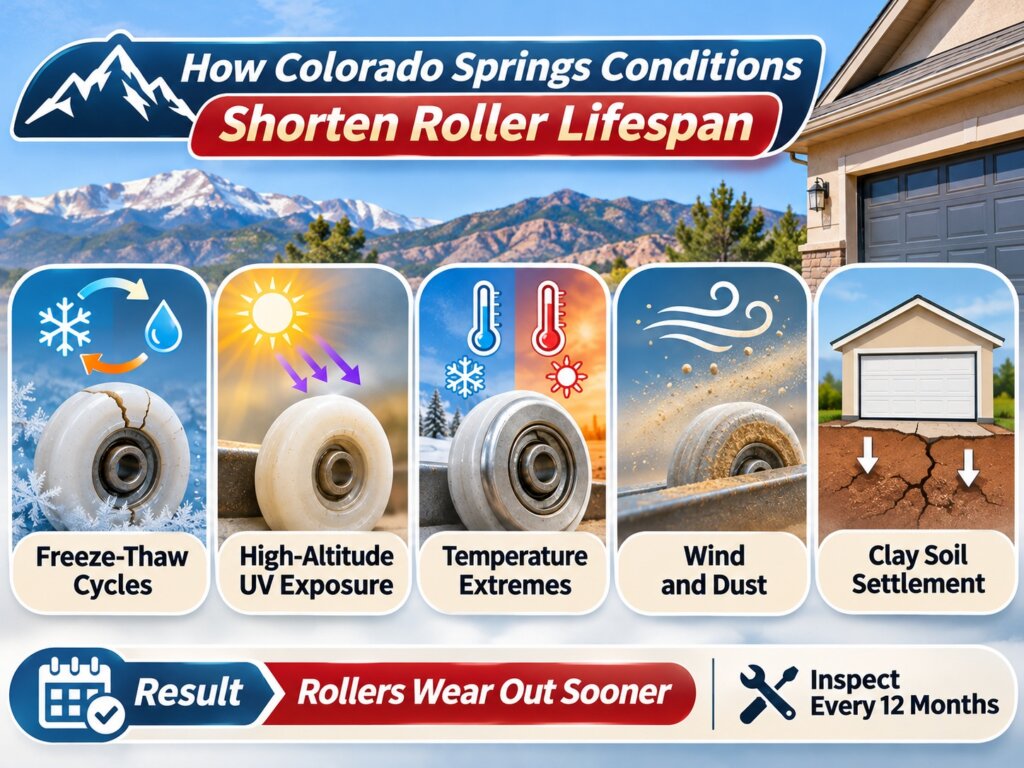
Local climate plays a direct role in how long rollers last. Colorado Springs sits at roughly 6,000 feet elevation, which brings intense UV radiation, wide temperature swings, and freeze-thaw cycles that affect every component of a garage door system. Understanding these factors helps you set realistic maintenance expectations.
1. Freeze-Thaw Cycles
Water seeps into small cracks in nylon rollers during wet weather, then expands when temperatures drop below freezing. Over multiple seasons, this process widens existing cracks and weakens the wheel structure. Steel rollers develop surface rust that eventually pits and seizes the bearing.
2. High-Altitude UV Exposure
At elevation, UV radiation is stronger than at sea level. Standard nylon rollers can become brittle after prolonged sun exposure, especially in garages with south-facing doors that receive direct afternoon sunlight. UV-stabilized nylon rollers or sealed-bearing models hold up better in these conditions.
3. Temperature Extremes
Summer temperatures in Colorado Springs can reach the upper 90s Fahrenheit. Winter lows regularly drop below 0°F. Thermal expansion and contraction stress roller bearings and track clearances. Lubricant in unsealed bearings thickens in cold weather, increasing drag and wear.
4. Wind and Dust
The Pikes Peak region experiences strong Chinook winds and dust from surrounding plains. Airborne grit enters open garage doors and deposits on roller wheels and tracks. Abrasive particles accelerate wear on both nylon and steel roller surfaces.
5. Clay Soil Settlement
Many Colorado Springs properties sit on expansive clay soils. Foundation and slab movement can shift the garage door frame slightly out of square over time. Even small frame shifts change the load distribution across rollers and tracks, causing uneven wear patterns.
Given these local stressors, rollers in Colorado Springs often reach end of service life sooner than manufacturer cycle ratings suggest. Routine inspection every 12 months is a practical baseline for this region.
What a Professional Roller Inspection Covers
A roller replacement is not just about swapping wheels. A thorough inspection ties roller condition to the health of the entire door system. Trained technicians check several interconnected components during a service visit.
According to federal regulations at 16 CFR 1211.16, residential garage door operator instructions must address correct adjustment, periodic checking, and maintenance. The same regulation states that repairs to cables, springs, and related hardware should be performed by a qualified service person—because improperly balanced doors can cause severe injury.
A qualified technician will check the following during a roller service call:
- All roller wheels for cracks, flat spots, and bearing condition
- Roller stems for bending, corrosion, or loose hinge bracket connections
- Track alignment and gap consistency along the full vertical and horizontal run
- Cable condition and drum seating on both sides of the door
- Spring balance—the door should stay in place when manually lifted halfway
- Opener force settings and auto-reverse function per UL 325 requirements
- Weather seal condition along the bottom and sides of the door
This is also a good time to consider a full preventive tune-up. Garage Door Repairs Colorado Springs offers comprehensive safety tune-ups that cover all of the above checkpoints, helping you avoid emergency calls during Colorado’s harshest weather months. Book a Safety Tune-Up to keep your door running reliably year-round.
Roller Types and What They Cost in a Colorado Springs Garage Door Service
Roller selection affects both upfront cost and long-term maintenance frequency. Knowing the differences helps you make an informed choice when a technician presents options.
1. Standard Steel Rollers
These are the least expensive option and come standard on many builder-grade doors. They are noisy, prone to rust, and typically rated for 10,000 to 20,000 cycles. They are rarely the right long-term choice for Colorado Springs conditions.
2. Standard Nylon Rollers
Quieter than steel and resistant to rust, standard nylon rollers are a solid mid-range option. They are rated for around 20,000 to 40,000 cycles. UV exposure and freeze-thaw cycles reduce that rating in this region.
3. Nylon Rollers with Sealed Ball Bearings
These are the premium residential option. Sealed bearings resist contamination from dust and moisture. Most are rated for 100,000 cycles or more. They run quietly, require less lubrication, and hold up well under Colorado Springs conditions. For most homeowners, this is the best value over a 5–10 year horizon.
4. Heavy-Duty Steel Rollers with Precision Bearings
Used primarily on commercial or oversized residential doors, these rollers handle high cycle counts and heavy door weights. They require regular lubrication and are not typically needed for standard residential applications.
Full set replacement with nylon sealed-bearing rollers on a standard two-car door generally runs less than the cost of a single emergency service call caused by a roller failure that damages the track. Investing in quality rollers during a planned service visit is the more cost-effective path.
If your door also needs track realignment, hinge replacement, or cable inspection, Garage Door Repairs Colorado Springs can bundle those services into a single visit. Explore our full range of repair services or request a quote to get a clear, itemized estimate before any work begins.
When to Schedule Garage Door Roller Repair in Colorado Springs Right Away
Some roller conditions are urgent. Others allow a few days before scheduling. Knowing the difference helps you prioritize correctly without unnecessary alarm.
Schedule same-day or next-day service if you notice any of the following:
- A roller has completely left the track and the door will not move safely
- The door is stuck open, leaving your home unsecured
- You hear a loud bang followed by the door going off track—this may indicate a broken spring or cable, not just a roller
- The door drops suddenly during operation
- The opener motor runs but the door does not move
Schedule within the next week if you notice:
- Increased noise during normal operation
- Slight vibration or shaking that was not present before
- Visible rust or surface cracking on rollers during a visual check
- The door moves slower than usual but still operates
UC ANR research on garage door gaps and closure integrity also highlights that proper door movement and seal contact matter for ember protection in wildfire-prone regions—a relevant concern for homeowners in areas like Falcon, Peyton, and Woodland Park near the urban-wildland interface. Keeping rollers and tracks in good condition supports consistent door closure and seal performance. Source: UC Agriculture and Natural Resources.
Conclusion
Garage door roller repair in Colorado Springs is not a one-size-fits-all decision—the right choice depends on roller age, door condition, and the specific demands of the local climate. Garage Door Repairs Colorado Springs brings 20-plus years of hands-on experience to every inspection, giving you a clear, honest recommendation backed by manufacturer specifications and local code compliance. Schedule your service visit today and get your door running safely before the next Colorado winter sets in.
Garage Door Repairs Colorado Springs specializes in precise roller and spring repair diagnostics to catch problems before they spread. Our technicians assess every component honestly, recommending only what your door truly needs. Contact us today to get started with a tailored repair plan built for your budget.
FAQs
How Much Does It Cost to Replace Garage Door Rollers in Colorado Springs?
Most roller replacements in Colorado Springs fall in the mid-hundreds depending on door size/weight, roller type (nylon vs. steel), number of rollers replaced, and whether additional work is needed (track alignment, hinge repair, or a tune-up). A technician can confirm exact pricing after inspecting wear patterns and door balance.
Can You Replace Garage Door Rollers Without Replacing the Track?
Yes—rollers can usually be replaced without replacing the track. Track replacement is only needed if it’s bent, cracked, severely rusted, or out of alignment beyond adjustment. We typically check track spacing, plumb, and fasteners during roller service to ensure smooth, safe travel.
What Are the Signs That Garage Door Rollers Need to Be Replaced?
Common signs include loud grinding or squealing, jerky movement, the door wobbling in the tracks, flat-spotted or chipped rollers, loose roller stems, visible rust, or the door coming off track. Excess vibration and uneven door travel often indicate roller wear and/or alignment issues.
How Long Does It Take to Replace Garage Door Rollers?
In many cases, replacing a full set of rollers takes about 60–90 minutes, depending on door type, access, and whether track alignment or other hardware adjustments are needed. Replacing one or two rollers can be quicker, but matching wear and confirming safe operation still takes time.
Should I Use Nylon or Steel Rollers for My Garage Door?
Nylon rollers are quieter and often preferred for most residential doors, especially with sealed bearings for durability. Steel rollers can handle heavy-use or heavier doors but are typically louder and may require more maintenance. The best choice depends on door weight, usage frequency, and your noise and longevity goals.
